Blog
At What Age Do Girls Start to Wear a Bra? A proper guide for growing girls


Growing up is a natural process filled with many changes, and one of the first noticeable signs of puberty for girls is the development of breasts. This is often the time when many begin to think about wearing a bra for the first time. The age at which girls start wearing bras varies widely—some may feel ready as early as 8, while others may not need one until their early teens. Every girl’s body grows at its own pace, and there’s no specific “right” age to start; it depends entirely on individual comfort and physical development.
Wearing a bra isn’t just about appearance—it’s often about support, comfort, and confidence. As a girl’s body changes, a well-fitted bra can help ease tenderness, provide support during physical activities, and help her feel more at ease in her clothing. Understanding when and why to begin wearing a bra can make this stage of growing up a positive and empowering experience.

1. Understanding the Onset of Puberty
Puberty is the period when a girl’s body begins to mature and become more adult-like. For most girls, puberty starts between ages 8 and 13, but this can differ based on genetics, nutrition, and overall health.
One of the earliest signs of puberty is the development of breast buds — small, firm lumps beneath the nipples that can feel tender or sore. This is usually when girls and their parents begin considering a bra for comfort and coverage.
2. Average Age Girls Start Wearing a Bra
| Age Range (Years) | Stage | Typical Bra Type |
|---|---|---|
| 8–10 | Early breast development begins; may feel tenderness | Training bra or sports bra |
| 10–12 | Noticeable breast growth; more physical activity | Sports bra or lightly padded bra |
| 12–14 | Puberty advances; many need regular bras | Lightly lined or supportive bras |
| 14+ | Continued development; personal style preference | Variety of bra types |
3. Why Wearing a Bra Can Help
Wearing a bra isn’t just about appearance — it can provide practical benefits, especially as the body changes.
Comfort and Support
As breasts develop, they can feel heavy or sore, especially during physical activities. A bra offers gentle support that reduces discomfort.
Ease During Physical Activities
Sports or active play can cause movement that some girls find uncomfortable. A sports bra helps keep everything secure and supported.
🫶 Confidence and Modesty
Many girls feel more confident wearing a bra under their clothes. It can help them feel more comfortable in social and school settings.
4. Types of First Bras
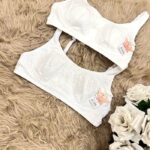
- Training Bras – Soft, stretchy fabric with little or no padding. Designed for the earliest stages of development.
- Sports Bras – Offer gentle compression and support during physical activity.
- Camisole Bras – Built-in shelf bras within camisoles for light support.
- Lightly Lined Bras – Provide shaping and coverage without discomfort.
5. Emotional and Social Aspects
Starting to wear a bra can be an emotional experience. Some girls are excited — it feels like a step toward maturity. Others might feel nervous or embarrassed. Parents and caregivers can help by keeping conversations open, kind, and normalizing the experience.
💬 Tips for Parents and Guardians
- Let your child decide when they’re ready.
- Go shopping together to make it a positive experience.
- Focus on comfort, not fashion at first.
- Normalize the change — avoid teasing or pressure.

6. Medical and Cultural Perspectives
Doctors emphasize that there’s no “correct” age for starting a bra. What matters most is that the child feels comfortable.
Cultural differences also influence when girls begin wearing bras. In some places, it’s more about modesty and social norms; in others, it’s purely for physical comfort.

7. Chart: Growth Stages and Bra Readiness
Below is a general chart illustrating physical development stages and when bra use commonly begins.
| Puberty Stage | Average Age | Physical Changes | Bra Readiness |
|----------------|--------------|------------------|----------------|
| Stage 1 | 7–9 | No visible development | Not needed |
| Stage 2 | 9–11 | Small breast buds, tenderness | Training bra optional |
| Stage 3 | 11–13 | Noticeable breast growth | Sports or training bra helpful |
| Stage 4 | 13–15 | Mature breast shape forming | Regular bras recommended |
| Stage 5 | 15+ | Fully developed | Personal preference |
8. Illustrative Diagram (for Educational Use)
(For classroom or website use, you can include a simple, non-body-specific diagram — like a growth timeline or icons showing age progression, not real photos.)
Example:
- Age 8–10 → “Training bra” icon
- Age 10–12 → “Sports bra” icon
- Age 12–14 → “Regular bra” icon

9. Key Takeaways
- Most girls start wearing bras between 8 and 14 years old.
- It depends on physical changes, comfort, and personal readiness.
- Starting early or late is completely normal.
- Parents and guardians should keep communication open, positive, and supportive.
Conclusion
Wearing a bra is a small but meaningful step in growing up. It’s not just about fashion — it’s about comfort, confidence, and understanding one’s body. Every girl’s journey is unique, and the best time to start is when she feels ready.In conclusion, the age at which girls start wearing a bra varies, typically ranging from 8 to 14 years, depending on their individual growth and comfort. There is no fixed rule—each girl’s body develops at its own pace, and what matters most is her readiness and confidence. Choosing the right time and type of bra can make this transition smoother, providing comfort, support, and a sense of self-assurance. With open communication and guidance from parents or guardians, wearing a bra can become a natural and positive part of growing up.